What I’m Learning and What I’m Leaving as I Turn 45 with Stage 4 Cancer
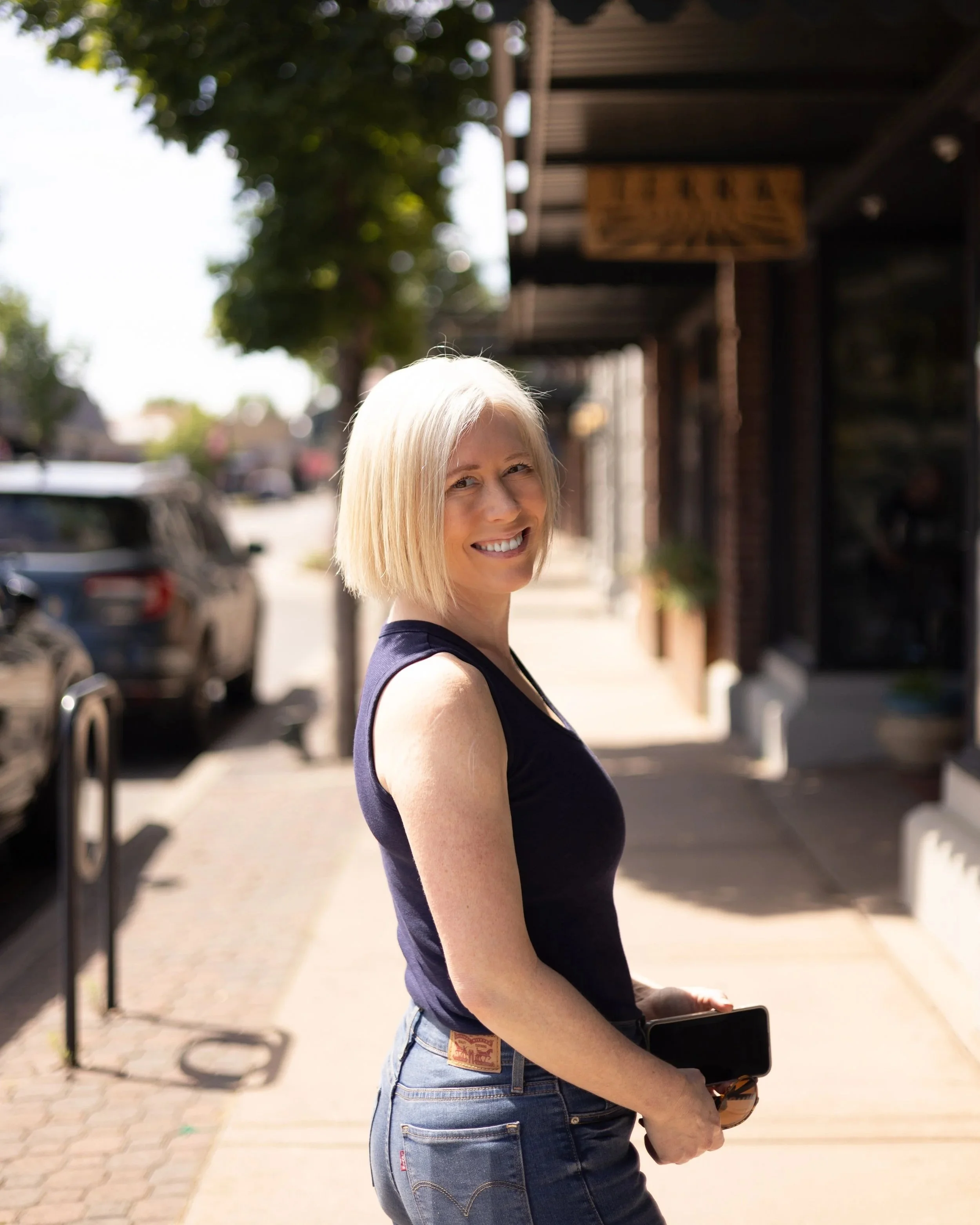
Hi, I’m Lissie Thomas, editor and founder of Real Life By Lissie. Let’s connect!
Apart from last year, which I’ll dig into shortly, I’ve been writing an open letter to myself, which also happens to be a blog post, for the past ten years now, and let me tell you, this one hits a little differently.
These reflections and wish lists have served as a reminder to me and anyone who reads them that each year brings with it new challenges, learning experiences, and opportunities to transition and grow as another turn around the sun begins.
Last year, I turned forty-four two months after being diagnosed with stage four Melanoma. You can read more about my experience with being diagnosed here. After having my life and the lives of my family be entirely turned upside down, and then rudely awakened to the fact that nothing in life is constant, nothing is promised, and nothing can prepare you for being told you might only have a few months left to live – while your husband sits and cries by your side, and you can’t stop thinking, “How are we going to tell the kids?”
What the life-altering experience of finding out I had late-stage cancer, and then figuring out how to live with it taught me, and I’m still learning, is the crux of this year’s letter to myself, and the story I want to share with you – all about what I’m still experiencing, growing from, and where I hope to go from here as a forty-five-year-old woman who’s a mother, business owner, writer, and, oh yes, also living with stage four cancer.
Care Less About Being Understood by Everyone
I used to care A LOT about what people thought of me. I made decisions based on this care in my business, with my kids and my parenting, and in my marriage.
In my twenties, it was all about being included and invited. In my thirties, I cared too much about perceptions of my life, and whether or not it looked picture perfect on the outside–meanwhile, it was anything but on the inside. In my early forties, I cared a lot about the legacy I was building and about making all the right decisions as a parent and a wife. Then I was diagnosed with cancer. And I watched as, within the heartbeat of a week, my entire world unraveled, and I was left wondering why. Why I had spent so much time trying to be understood by everyone. Why I had wasted so many years making decisions based on someone else’s opinion. And why I always felt the need to justify myself, my decisions, my life choices.
But something happens when you find out you have stage four cancer, and that certain future you thought was promised is suddenly ripped out from under you. What happens is that you stop taking and accepting unsolicited reviews of your life. What happens is that you start being unapologetically selective about who you surround yourself with and how you engage with the people in your life. And you completely stop caring about being the most liked person in the room, or wasting your energy explaining yourself.
Frankly, this realization of caring less about what other people think of me is one I am forever grateful was bestowed upon me. Even though it took finding out that I had late-stage cancer to really have the change set in, I am grateful for the positive byproduct from what was an absolutely sh*tty life-altering time.
Am I now so enlightened that I don’t ever let things get to me, or people have power over me that shouldn’t? Absolutely not.
The me that cares less about what other people do, think, or say about me is someone I am still learning to be every single day. But I do notice that I now know how to change the channel in my brain quicker when something or someone brings energy and advice into my world that is not helpful or productive for my family and me:
First, I don’t always catch this happening right away. But the second I notice I’m reverting to old people-pleasing or insecurity-based thinking, I stop myself and pause. I then ask myself the following questions:
Can I change this? Most of the time the answer is, “I can change my behavior, but I can’t change them.”
Is the outcome of complying, or participating, going to benefit my family or me?
If I choose not to engage, will everything be okay?
I encourage you to answer these questions, and then only proceed if there is a truly relevant reason to your overall well-being, or life, that requires you to participate. And this doesn’t mean I don’t care about others. In fact, I care more now. It’s about knowing the difference between what’s helpful to others and yourself, what’s necessary for your goals, life, and well-being, and what’s just noise that you can and should ignore.
Listen to Your Body and Stay Connected to Yourself
Turning 45 comes with a lot of unexpected, and perhaps unwelcome, changes, regardless of whether you’re dealing with a chronic illness, cancer, or what the entire world acts like is “normal and uneventful,” like perimenopause or menopause. The mental and emotional shifts that come with knowing that “if you’re lucky,” you’re now halfway through your life can feel daunting and confusing.
I know…it’s deep and a little depressing, but only if you see it as something negative. Let me explain what I mean.
Your Relationship to Your Body Will Change:
The change for me was drastic and sudden, because it was cancer, and we had to scramble to adjust immediately. The side effects of the disease and where it is in my body instantly caused mental, physical, and emotional changes that I had no choice but to deal with.
Regardless of your overall health, this age changes your relationship with your body, too. For one thing, you’re aging – we all are – and because of that, you may wake up some mornings and not recognize yourself or feel like yourself.
You might be starting to experience menopausal changes that are affecting your weight, your sleep, your diet. If you are trying to define your symptoms and whether or not you are entering menopause, this section of the Menopause Association website goes through the ABCs of Menopause for you.
You might be caring for and dealing emotionally with a family member's illness.
Being a caregiver or support system for someone dealing with an illness is just as challenging as being the person with the condition!
You might just want something different for your body, your health, and the longevity of your life. Making a life shift because you no longer want the same things, or because you're trying to prevent health and life issues later, is part of this mix.
Whatever it is that’s changing in your body, you’re not alone. There are a million different articles out there to help you with whatever it is you’re dealing with as you enter middle life, but there’s one thing I want to take a moment to talk about.
Listen to Your Body:
Whether it’s that you’re exhausted all the time or feel overwhelmed, or the stress of your life and health never seems to subside. Whether you have challenges in your relationships, with your children, or spouse that never seem to let up, these things take a toll on your body and soul over time.
If you’re feeling unwell and you’re not quite sure what’s wrong. If you don’t feel like yourself, but don’t want to make waves in your life, stop ignoring it; listen to that instinct. Start seeking the support you need to figure out how to optimize your health and your life. Because according to the National Library of Medicine, approximately 78.4% of midlife adults (ages 45–64) report having at least one chronic health condition, and you don’t want to look back and wish you had done something sooner.
If I could change anything about the years leading up to when I was diagnosed with cancer, I would change the amount of time I spent looking in the wrong places for answers and ignoring the warning signs in my body.
You should feel good. You should feel rested. If you don’t, something might be going on, and you need to take the time to try and resolve it before these symptoms turn into something more serious.
Learning to Accept:
Suppose you’re already dealing with chronic illness or disease. First of all, I’m so sorry.
There are no good words or things anyone can say to help you deal with something that alters your entire reality. That said, I want you to know you are strong enough to do this!
A full life comes down to being conscious and in tune with your body, your mind, and your soul. And no matter what unwelcome elements come your way, you can still find purpose and peace within the mess.
If you’re experiencing side effects from treatment, ongoing issues with medications, or pain in your joints or body, it’s all very exhausting. If you’re starting to go through menopause, these same changes can be debilitating, shocking, and unpleasantly surprising.
Because of all this, listening to when you need a break, when you need to change your habits, and when you need to reduce stress is critically important. Don’t just bulldoze through it. The reality is, some of us may never “be through it,” so it’s essential to figure out what a happy, fulfilling life can look like with these elements as part of the whole picture.
Read my post on the side effects and experience I had with Immunotherapy treatment for stage four melanoma, if you’re going into a period of treatment or medically induced change.
The Perfect Moment Doesn’t Exist. Stop Waiting
There was a time in the past year when I was in the depths of cancer treatment, and let’s be honest, also the depths of despair, where I really thought, “This is it. I’ll never travel again. I’ll never see all those places I thought I would. I won’t get to see my kids go off to college”...You get the point.
Then, things started improving. The treatment started working. I started being able to get up off the couch and walk to the end of the driveway. And something hit me as the fog of thinking it was all over began to lift. Like a mantra, one thought kept popping up in my head. It was, “Don’t wait for the perfect moment. The perfect moment doesn’t exist.”
Now is the perfect time to do whatever it is that you have been postponing or pushing back because you are too busy or too scared.
Of course, you have to stay grounded with anything you want to pursue in life, based on your energy, health, and actual circumstances, but that doesn’t mean you can’t start.
Beginning imperfectly is enough. What I’m learning is that you can’t wait for a stress-free season when all circumstances align to do the things on your bucket list. And the biggest thing is that you can’t keep saying to yourself, “I’ll do it next year.” None of us is guaranteed more than the present moment, so don’t wait!
Here are a few questions to ask yourself to determine where to start:
What would I do if I wasn’t worried about the consequences?
What feels like it is missing from your life?
How can you connect with that person or group more now?
What small step can you take to start today?
Make Room For Those Who See You
I cannot emphasize enough how essential it is, as you move into middle-aged womanhood, to lean into and make room for those who support you, see you, and love you and your family without expecting anything in return, and without an agenda.
Especially if you are dealing with health challenges, a chronic illness, or are the caregiver for someone experiencing these things.
Who still treats you like a whole person?
One of the things that has been incredibly shocking to me, and hard to accept as I’ve been making my way through cancer treatment, is how many people treat me differently. It’s the looks, the comments, the uncomfortability. It’s like being on the playground and someone saying, “She has coodies!” And then no one wants to touch or play with you for the next five recesses.
I've quickly learned to make time for, and spend time with, the people who can still treat me, well, like me. I’m not the cancer in my body. I am not broken. I didn’t cause this. And neither did you.
Make room and time for those who see the person behind the diagnosis, not just the diagnosis itself.
Who checks in on you and your family?
As I’ve gotten older, and especially after being diagnosed with cancer, I’ve noticed that some people just don’t show up. It’s ranged from people I thought were close friends completely disappearing to individuals who want to claim what’s happening to my body, mind, and soul as their own, feel entitled to constant updates, and want to create drama around the very challenging and real pain and suffering my family and I are going through.
These are not my people, and they’re not yours either.
The people who check in without demanding an update are your people. The individuals who just stop by with dinner, or plan things with you or your children without making it difficult. These are your people.
Whether your body is changing in a normal midlife way, or you are managing an illness or condition, learning to surround yourself only with people and communities who really see you, see your needs, and support you and your family is not optional; it’s necessary.
It May Not Be Your Actual Family:
I hate to be the bearer of this kind of news. Still, for me, it has been helpful to recognize and define who is important to my quality of life, well-being, and the well-being of my husband and children, and who is demanding attention from my already-stretched-thin body and brain.
There is a toxic cultural storyline that states, “family is the most important thing.” And, when something bad happens, “You have to lean on your family.”
Well, let me tell you, not all families are healthy. Not all extended family relationships are based on support, trust, and love. And that’s okay.
Do not waste one minute feeling bad in your life that you don’t have the relationship you wish you had with your father, mother, sister, brother…the list goes on. The reality is, many of us don’t gain real support from our biological family.
What’s more critical as you move into middle-aged adulthood is to determine the following:
Who brings me joy in life and doesn’t add stress?
Who wants a relationship with me or my family without demanding something in return?
Who actually helps out (in a real and unselfish way) when the sh*t hits the fan?
Who regulates my nervous system?
Who puts me on heightened alert?
The people you can actually lean on are the ones to lean into. It doesn’t matter if they are a part of a friend-family or your biological family. And don’t for one minute feel bad about which of those it happens to be.
Let Your Ambitions Change Without Apologizing
You’ve likely heard this before, but truly, you only get this one life. And if there’s something itching at you, saying “this isn’t right,” in how you live your life, in your career, or relationships, your internal response is probably something like, “Yes, changing course or my ambitions sounds great, but shouldn’t I stay the course?”
Here’s the thing: when you reach a certain point in life, and for most women, it’s right around 45 or 50 years of age, you begin to realize that you really do only have this singular life. And you’re not the same person you were at 20, 30, or even 40.
Perhaps you are super satisfied with your career, and it’s other stuff, like what you’re doing with your life outside of work, that eats away at you.
Or, maybe you’re just burnt out, or your path at the moment isn’t providing you with enough financially or emotionally.
I’ve been there! While I've owned my own business, a boutique Marketing Agency, for the past 13+ years, my ambitions and needs have changed significantly. And not just that. I have passions, projects, and places I want to experience that are on my bucket list. I want these things, and I want them to fit into the overall picture of me being a mom, business owner, and woman in mid-life.
So instead of just daydreaming about your ambitions or apologizing for wanting to grow or change, start taking steps to live the life you want.
Here’s where I would ask yourself, as I have:
Which goals still excite you?
Which measures of success feel less important?
What would you like more room for?
How are you making decisions differently about work, family, and creativity?
If you need more inspiration for what to do if you’ve outgrown your current life, read this post about changing your trajectory based on new goals or lifestyle desires.
Gratitude Doesn’t Mean That Everything is Good
Similar to toxic positivity, nothing irks me more than people who “gratitude bomb” others. Just by saying you’re grateful for a crap hand you’ve been dealt doesn’t make everything just magically get better.
And no, if you’re feeling disillusionment and lack of clarity in your life right now about what it means to be over 45 years old as a woman, or how to deal with an illness, or menopausal changes in your body, I would bet that the last thing you want to hear is that “you just need to be grateful for what you have.” Or, “Remember that it could always be worse.”
Being a human being is messy. Being a parent is overwhelming. Being a woman in middle-aged life is confusing and complicated. You can acknowledge all of this, feel it, and also find gratitude in the right moments and ways that work for you.
The good news is that, once you allow yourself to feel the feelings you’re actually experiencing, you’ll also find that you’re a lot more grateful for what you do have.
Full disclosure, I sit down every morning and write down five things that make me feel grateful. Some days the things are big, like I had a good scan and the cancer is shrinking. But some days the most I can be grateful for is my warm cup of coffee, or a walk outdoors. And that’s okay!
Each day, I also write down five things that challenge or frustrate me. And the amazing thing about getting that angst out of my head is that I find I’m suddenly more grateful!
Long story short, you can be two things at the same time. You can be grateful, and things can be going horribly wrong. You can be in transition and still feel fulfilled. You can be fighting an illness, and still honor the fact that your body is strong and is fighting with you.
What I’m Taking into 45, and What I’m Leaving Behind
Here’s why I love writing a post each year about what I want to take with me and what I want to leave behind: it not only gives me space and a pause to recognize how far I have come, but also gives me a personalized roadmap for the next year.
With all of this in mind, and as I walk into my 46th year with eyes open and heart open, I have a few intentions and affirmations for myself. Who knows, you might even find these helpful to you as you enter whatever next phase of your life lies ahead.
I’m no longer doing the expected thing. I’m going to live, work, and exist for this moment, and the moments that I can create with my intentions.
I’m spending time every single day on something or with someone who enriches my life.
Writing and exploring what I can do with my writing skills
Spending time with my kids and husband
Taking time alone (I do actually really enjoy this)
Finding time with people who leave me feeling like I glow
I’m no longer explaining myself. What I do, why I do it, and who I do it with is just for me, and I don’t need permission or anyone’s blessing.
I’m starting things before I think I’m ready. And letting go of things that aren’t bringing me joy. Whether it’s planning a trip or working on a passion project, I’m not waiting for the right moment. And the same goes for removing things. I’m just doing it, or speaking up without worrying that I’m being too much.
I’m listening to my body and my instinct. When it comes to my health and healing, or life choices that need a decision, I’m trusting that I know what to do and will make the right choices.
“What have you been waiting for the perfect moment to do?”
Let me know in the comments!
Want more from your career? Ready to grow, but don’t know how? Get our personal strategic planning workbook, and take the first step!